What Are NANDA Diagnoses?
NANDA diagnoses are clinical tools that describe human responses to actual or potential health problems. They are designed to improve communication among healthcare professionals and support high-quality care through a standardized language.
“A nursing diagnosis is a clinical judgment about individual, family, or community responses to actual or potential health problems.” – NANDA-I
RESOURCES: Download the guides to learn more about NANDA diagnoses and NANDA Taxonomy II.
The History of NANDA
The history of NANDA began in the 1970s, when a group of nurses in the United States identified the need to standardize diagnostic language in nursing practice. This initial effort led to the founding of NANDA International, which has since become a globally recognized organization.
- 1973: NANDA was founded to address the need for a standardized nursing language.
- 1982: The first official list of nursing diagnoses was published.
- 2002: The organization changed its name to NANDA International, reflecting its global reach.
- Today: More than 277 diagnoses are classified in Taxonomy II and used worldwide.

The History of NANDA International
NANDA International was founded in the 1980s to organize and standardize nursing diagnoses. Since its creation, it has worked to provide a clear framework that allows nurses to identify diagnoses, develop care plans, and improve communication among healthcare professionals. NANDA has carried out regular revisions that reflect changes in patients' care needs. These revisions have been essential to keeping diagnostic content relevant and applicable in clinical practice.
Recent Changes to Diagnoses
The latest updates to NANDA diagnoses (2024–2026) show a clear emphasis on adding new diagnoses that address current health issues. This evolving approach keeps nursing terminology aligned with advances in medicine, changes in society, and emerging public health challenges.
Newly Added Diagnoses
- Risk for ineffective home maintenance behaviors: This diagnosis addresses concerns about a patient's ability to maintain a safe and healthy environment.
- Risk for frail elderly syndrome: A diagnosis focused on the complex vulnerabilities of older adults.
- Deficient knowledge of treatment management: Reflects the need to educate patients about their treatment to prevent complications.
Revised and Retired Diagnoses
With each revision, NANDA also removes diagnoses that are no longer relevant or have been incorporated into broader categories. For example, diagnoses such as "disturbed body perception" have been revised to reflect new trends in patient-centered care. This helps nursing practice remain adaptable and responsive to health needs.
Updates include revised descriptions and more precise language, which are essential for accurate interpretation and use in clinical practice. NANDA also seeks to introduce diagnoses in response to global health trends, reflecting an approach that considers patients' cultural and social diversity.
Integrating NANDA with NIC and NOC
Integrating NANDA diagnoses with the Nursing Interventions Classification (NIC) and Nursing Outcomes Classification (NOC) provides a strong framework for nursing practice. Together, these systems allow professionals to take a structured approach to patient care.
Nursing Interventions Classification (NIC)
The Nursing Interventions Classification (NIC) is essential because it provides a standardized system for classifying the actions nurses can take in response to NANDA diagnoses. Through a shared, systematic language, NIC helps ensure that care is consistent and effective.
Examples of Common Interventions
Interventions can vary widely depending on the specific diagnosis. Examples include:
- Self-care education: Teaching patients how to manage their health, especially when living with chronic conditions.
- Pain management: Techniques for relieving acute and chronic pain through medication and nonpharmacological strategies.
- Infection prevention: Actions intended to minimize patients' risk of infection, such as hygiene protocols and wound care.
- Emotional support: Interventions that provide psychological support, especially during bereavement or terminal illness.
- Nutritional support: Planning diets and monitoring the patient's nutritional status.
Nursing Outcomes Classification (NOC)
The Nursing Outcomes Classification (NOC) makes it possible to measure the success of interventions based on NANDA diagnoses. Through a structured approach, NOC provides clear expectations for patient progress.
Measuring Success and Outcomes
Outcomes are evaluated using indicators that allow professionals to assess the impact of their interventions. These indicators may include:
- Overall health status: Assessing how the patient's health has improved through specific interventions.
- Patient satisfaction: Measuring the patient's perception of the quality of care received and their own involvement in that care.
- Treatment adherence: Assessing how closely the patient follows treatment and self-care recommendations.
- Symptom reduction: Assessing decreases in the signs and symptoms present at the start of treatment.
By combining these systems, nursing professionals can gain a clear, comprehensive picture of a patient's needs, enabling more effective care focused on the person's well-being.

NANDA Taxonomy II
NANDA Taxonomy II has three levels: domains, classes, and nursing diagnoses.
1. Domains
A domain is a sphere of activity, study, or interest (Roget, 1980). The taxonomy contains 13 NANDA domains. Each domain is organized into different classes.
2. Classes
A class is a subdivision of a larger group: a division of people or things by quality, rank, or grade (Roget, 1980). The taxonomy contains 48 classes. The classes group nursing diagnoses together.
3. Nursing Diagnosis
A nursing diagnosis is a clinical judgment about an individual's, family's, group's, or community's human response to actual health problems or life processes, or vulnerability to that response. A nursing diagnosis provides the basis for selecting nursing interventions to achieve outcomes for which the nurse is accountable (approved at the ninth conference, 1990).
NANDA Domains and Diagnostic Classes
NANDA diagnoses are organized into 13 domains, each divided into specific classes. These categories help healthcare professionals identify and classify human responses in a structured way.
| Domain | Classes |
|---|---|
1. Health Promotion |
Health awareness, Health management |
2. Nutrition |
Ingestion, Digestion, Absorption, Metabolism, Hydration |
3. Elimination and Exchange |
Urinary function, Gastrointestinal function, Integumentary function, Respiratory function |
4. Activity and Rest |
Sleep/rest, Activity/exercise, Energy balance, Cardiovascular/pulmonary responses, Self-care |
5. Perception and Cognition |
Attention, Orientation, Sensation/perception, Cognition, Communication |
6. Self-Perception |
Self-concept, Self-esteem, Body image |
7. Role Relationship |
Caregiving roles, Family relationships, Role performance |
8. Sexuality |
Sexual identity, Sexual function, Reproduction |
9. Coping and Stress Tolerance |
Post-trauma responses, Coping responses, Neurobehavioral stress |
10. Life Principles |
Values, Beliefs, Value/belief/action congruence |
11. Safety and Protection |
Infection, Physical injury, Violence, Environmental hazards, Defensive processes, Thermoregulation |
12. Comfort |
Physical comfort, Environmental comfort, Social comfort, Psychological comfort |
13. Growth and Development |
Growth, Development |
Examples of Diagnoses by Domain
The following examples illustrate some key domains:
-
Domain 1: Health Promotion
Diagnosis: Readiness for enhanced health management.
-
Domain 2: Nutrition
Diagnosis: Imbalanced nutrition: more than body requirements, related to poor eating habits.
-
Domain 4: Activity and Rest
Diagnosis: Disturbed sleep pattern related to stress.
-
Domain 11: Safety and Protection
Diagnosis: Risk for infection related to recent surgery.
The 5 Types of NANDA Nursing Diagnoses
NANDA diagnoses are classified into five main types, each focusing on a different aspect of human responses to health problems. Each type is described below with practical examples.
Example: Chronic pain syndrome (00255), which includes or implies other nursing diagnoses such as Disturbed sleep pattern (00198), Social isolation (00053), Fatigue (00093), or Impaired physical mobility (00085).

-
Actual Nursing Diagnosis
Describes a patient's actual health problems, always supported by observable signs and symptoms. This type of diagnosis helps identify problems that require immediate intervention.
Example: "Impaired physical mobility related to chronic pain, as evidenced by difficulty walking." -
Risk Nursing Diagnosis:
Refers to situations in which risk factors are present and intervention is needed before an actual problem develops.
Example: "Risk for infection related to recent surgery." -
Health Promotion Diagnosis:
Focuses on improving the overall well-being of a patient or community by encouraging healthy habits and conditions.
Example: "Readiness for enhanced health management, as evidenced by changes in eating habits." -
Wellness Diagnosis:
Describes situations in which a patient wants to improve a controlled problem or resolve a specific situation.
Example: "Readiness for enhanced sleep pattern related to a desire to optimize rest." -
Syndrome Diagnosis:
Describes specific, complex situations that always involve several interrelated diagnoses requiring a coordinated approach to care.
Example: "Post-trauma syndrome related to traumatic events, as evidenced by episodes of anxiety and avoidance."
Complete List of NANDA-I Nursing Diagnoses 2024–2026
DOMAIN 1: HEALTH PROMOTION
Awareness of well-being or normal functioning and of the strategies used to maintain control, as well as to improve well-being or normal functioning.
Class 1. Health Awareness:
Recognition of normal functioning and well-being.
- (00097) – Decreased diversional activity engagement
- (00448) – Risk for decreased diversional activity engagement
- (00355) – Excessive sedentary behaviors
- (00394) – Risk for excessive sedentary behaviors
- (00273) – Imbalanced energy field
Class 2. Health Management
Identifying, controlling, carrying out, and integrating activities to maintain overall health and well-being.
- (00276) – Ineffective health self-management
- (00369) – Risk for ineffective health self-management
- (00293) – Readiness for enhanced health self-management
- (00080) – Ineffective family health management
- (00410) – Risk for ineffective family health management
- (00356) – Ineffective community health management
- (00413) – Risk for ineffective community health management
- (00489) – Risk for ineffective blood glucose pattern self-management
- (00277) – Ineffective dry eye self-management
- (00352) – Ineffective dry mouth self-management
- (00412) – Risk for ineffective dry mouth self-management
- (00397) – Ineffective fatigue self-management
- (00278) – Ineffective lymphedema self-management
- (00281) – Risk for ineffective lymphedema self-management
- (00384) – Ineffective nausea self-management
- (00418) – Ineffective pain self-management
- (00447) – Readiness for enhanced weight self-management
- (00398) – Ineffective overweight self-management
- (00487) – Risk for ineffective overweight self-management
- (00485) – Ineffective underweight self-management
- (00486) – Risk for ineffective underweight self-management
- (00353) – Ineffective health maintenance behaviors
- (00369) – Risk for ineffective health maintenance behaviors
- (00354) – Ineffective home maintenance behaviors
- (00370) – Risk for ineffective home maintenance behaviors
- (00371) – Readiness for enhanced home maintenance behaviors
- (00372) – Readiness for enhanced exercise engagement
- (00373) – Inadequate health literacy
- (00374) – Risk for inadequate health literacy
- (00375) – Readiness for enhanced health literacy
- (00376) – Readiness for enhanced healthy aging
- (00377) – Elder frailty syndrome
- (00378) – Risk for elder frailty syndrome
DOMAIN 2: NUTRITION
Activities of taking in, assimilating, and using nutrients to maintain and repair tissues and produce energy.
Class 1. Ingestion:
Taking food or nutrients into the body.
- (00343) – Inadequate nutritional intake
- (00409) – Risk for inadequate nutritional intake
- (00419) – Readiness for enhanced nutritional intake
- (00359) – Inadequate protein energy nutritional intake
- (00360) – Risk for inadequate protein energy nutritional intake
- (00371) – Ineffective chestfeeding
- (00406) – Risk for ineffective chestfeeding
- (00347) – Disrupted exclusive chestfeeding
- (00382) – Risk for disrupted exclusive chestfeeding
- (00479) – Readiness for enhanced chestfeeding
- (00333) – Inadequate human milk production
- (00334) – Risk for inadequate human milk production
- (00271) – Ineffective infant feeding dynamics
- (00270) – Ineffective child eating dynamics
- (00269) – Ineffective adolescent eating dynamics
- (00103) – Impaired swallowing
Class 2. Digestion:
Physical and chemical processes that convert food into substances suitable for absorption and assimilation.
- This class currently contains no diagnoses.
Class 3. Absorption:
The transport of nutrients to body tissues.
- This class currently contains no diagnoses.
Class 4. Metabolism:
Chemical and physical processes that occur in living organisms and cells to develop and use protoplasm, produce waste and energy, and release energy for all vital processes.
- (00194) – Neonatal hyperbilirubinemia
- (00230) – Risk for neonatal hyperbilirubinemia
Class 5. Hydration:
The intake and absorption of fluids and electrolytes.
- (00491) – Risk for impaired water-electrolyte balance
- (00492) – Risk for impaired fluid volume balance
- (00026) – Excessive fluid volume
- (00370) – Risk for excessive fluid volume
- (00421) – Inadequate fluid volume
- (00420) – Risk for inadequate fluid volume
DOMAIN 3: ELIMINATION AND EXCHANGE
Secretion and excretion of the body's waste products.
Class 1. Urinary Function:
The process of secreting, reabsorbing, and excreting urine.
- (00016) – Impaired urinary elimination
- (00322) – Risk for urinary retention
- (00297) – Disability-associated urinary incontinence
- (00310) – Mixed urinary incontinence
- (00017) – Stress urinary incontinence
- (00019) – Urge urinary incontinence
- (00022) – Risk for urge urinary incontinence
Class 2. Gastrointestinal Function:
The absorption and excretion of the end products of digestion.
- (00423) – Impaired gastrointestinal motility
- (00422) – Risk for impaired gastrointestinal motility
- (00344) – Impaired intestinal elimination
- (00346) – Risk for impaired intestinal elimination
- (00235) – Chronic functional constipation
- (00236) – Risk for chronic functional constipation
- (00424) – Impaired fecal continence
- (00345) – Risk for impaired fecal continence
Class 3. Integumentary Function:
The process of secretion and excretion through the skin.
- This class currently contains no diagnoses.
Class 4. Respiratory Function:
The process of gas exchange and elimination of the end products of metabolism.
- (00030) – Impaired gas exchange
DOMAIN 4: ACTIVITY AND REST
Production, conservation, expenditure, or balance of energy resources.
Class 1. Sleep and Rest
Sleep, rest, relaxation, or inactivity.
- (00337) – Ineffective sleep pattern
- (00407) – Risk for ineffective sleep pattern
- (00417) – Readiness for enhanced sleep pattern
- (00323) – Ineffective sleep hygiene behaviors
- (00408) – Risk for ineffective sleep hygiene behaviors
Class 2. Activity and Exercise:
Moving parts of the body (mobility), working, or performing actions, often, though not always, against resistance.
- (00085) – Impaired physical mobility
- (00324) – Risk for impaired physical mobility
- (00091) – Impaired bed mobility
- (00089) – Impaired wheelchair mobility
- (00363) – Impaired sitting ability
- (00364) – Impaired standing ability
- (00367) – Impaired transferring ability
- (00365) – Impaired walking ability
Class 3. Energy Balance:
A state of dynamic balance between the intake and expenditure of resources.
- (00298) – Decreased activity tolerance
- (00299) – Risk for decreased activity tolerance
- (00477) – Excessive fatigue burden
- (00465) – Impaired surgical recovery
- (00464) – Risk for impaired surgical recovery
Class 4. Cardiovascular and Pulmonary Responses:
Cardiopulmonary mechanisms that support activity and rest.
- (00311) – Risk for impaired cardiovascular function
- (00362) – Risk for imbalanced blood pressure
- (00240) – Risk for decreased cardiac output
- (00201) – Risk for ineffective cerebral tissue perfusion
- (00204) – Ineffective peripheral tissue perfusion
- (00228) – Risk for ineffective peripheral tissue perfusion
- (00032) – Ineffective breathing pattern
- (00033) – Impaired spontaneous ventilation
- (00431) – Impaired child ventilatory weaning response
- (00430) – Impaired adult ventilatory weaning response
Class 5. Self-Care:
The ability to perform activities to care for one's own body and bodily functions.
- (00331) – Decreased self-care ability syndrome
- (00332) – Risk for decreased self-care ability syndrome
- (00442) – Readiness for enhanced self-care abilities
- (00326) – Decreased bathing abilities
- (00327) – Decreased dressing abilities
- (00328) – Decreased feeding abilities
- (00330) – Decreased grooming abilities
- (00329) – Decreased toileting abilities
- (00375) – Ineffective oral hygiene behaviors
- (00414) – Risk for ineffective oral hygiene behaviors
DOMAIN 5: PERCEPTION AND COGNITION
The human information-processing system, including attention, orientation, sensation, perception, cognition, and communication.
Class 1. Attention:
Mental readiness to notice or observe.
- This class currently contains no diagnoses
Class 2. Orientation:
Awareness of time, place, and person.
- This class currently contains no diagnoses.
Class 3. Sensation and Perception:
Receiving information through touch, taste, smell, sight, hearing, and kinesthesia, and understanding sensory data to identify, associate, or recognize patterns.
- This class currently contains no diagnoses.
Class 4. Cognition:
The use of memory, learning, thought, problem-solving, abstraction, judgment, insight, intellectual ability, calculation, and language.
- (00128) – Acute confusion
- (00173) – Risk for acute confusion
- (00129) – Chronic confusion
- (00222) – Ineffective impulse control
- (00493) – Disrupted thought processes
- (00435) – Inadequate health knowledge
- (00499) – Readiness for enhanced health knowledge
- (00131) – Impaired memory
- (00429) – Impaired decision-making
- (00184) – Readiness for enhanced decision-making
- (00242) – Impaired emancipated decision-making
- (00244) – Risk for impaired emancipated decision-making
- (00243) – Readiness for enhanced emancipated decision-making
Class 5. Communication:
Sending and receiving verbal and nonverbal information.
- (00051) – Impaired verbal communication
- (00434) – Risk for impaired verbal communication
- (00368) – Readiness for enhanced verbal communication
DOMAIN 6: SELF-PERCEPTION
Awareness of oneself, one's family, or one's group.
Class 1. Self-Concept:
An individual's or family's perceptions of the whole self.
- (00167) – Readiness for enhanced self-concept
- (00494) – Disrupted personal identity
- (00495) – Disrupted family identity syndrome
- (00496) – Risk for disrupted family identity syndrome
- (00488) – Risk for impaired human dignity
- (00341) – Readiness for enhanced transgender social identity
Class 2. Self-Esteem:
Evaluation of one's own or one's family's worth, capabilities, significance, and success.
- (00483) – Chronic inadequate self-esteem
- (00480) – Risk for chronic inadequate self-esteem
- (00481) – Situational inadequate self-esteem
- (00482) – Risk for situational inadequate self-esteem
- (00338) – Inadequate health self-efficacy
Class 3. Body Image
A mental image of one's own body
- (00497) – Disrupted body image
DOMAIN 7: ROLE RELATIONSHIP
Positive and negative connections or associations among individuals or groups, and the ways in which those connections are expressed.
Class 1. Caregiving Roles
Socially expected behavior patterns of people who provide care and are not healthcare professionals
- (00436) – Impaired parenting behaviors
- (00437) – Risk for impaired parenting behaviors
- (00438) – Readiness for enhanced parenting behaviors
- (00387) – Excessive parental role conflict
Class 2. Family Relationships:
Associations among people who are related biologically or by choice.
- (00389) – Disrupted family interaction patterns
- (00440) – Risk for disrupted family interaction patterns
- (00388) – Impaired family processes
- (00159) – Readiness for enhanced family processes
- (00439) – Risk for disrupted attachment behaviors
Class 3. Role Performance:
The quality of functioning in relation to socially expected behavior patterns.
- (00055) – Ineffective role performance
- (00449) – Ineffective intimate partner relationship
- (00445) – Risk for ineffective intimate partner relationship
- (00446) – Readiness for enhanced intimate partner relationship
- (00052) – Impaired social interaction
- (00221) – Ineffective childbearing process
- (00227) – Risk for ineffective childbearing process
- (00208) – Readiness for enhanced childbearing process
DOMAIN 8: SEXUALITY
Sexual identity, sexual function, and reproduction.
Class 1. Sexual Identity:
Being a particular person in relation to sexuality or gender.
- This class currently contains no diagnoses.
Class 2. Sexual Function:
The capacity or ability to participate in sexual activities.
- (00386) – Impaired sexual function
Class 3. Reproduction:
Any process through which human beings are produced.
- (00349) – Risk for impaired maternal-fetal dyad
DOMAIN 9: COPING AND STRESS TOLERANCE
Dealing with life events and processes.
Class 1. Post-Trauma Responses:
Reactions that occur after physical or psychological trauma.
- (00141) – Post-trauma syndrome
- (00145) – Risk for post-trauma syndrome
- (00484) – Risk for disrupted immigration transition
Class 2. Coping Responses:
Processes for managing environmental stress.
- (00405) – Maladaptive coping
- (00158) – Readiness for enhanced coping
- (00373) – Maladaptive family coping
- (00075) – Readiness for enhanced family coping
- (00456) – Maladaptive community coping
- (00076) – Readiness for enhanced community coping
- (00366) – Excessive caregiving burden
- (00401) – Risk for excessive caregiving burden
- (00301) – Maladaptive grieving
- (00302) – Risk for maladaptive grieving
- (00285) – Readiness for enhanced grieving
- (00210) – Impaired resilience
- (00211) – Risk for impaired resilience
- (00212) – Readiness for enhanced resilience
- (00185) – Readiness for enhanced hope
- (00325) – Inadequate self-compassion
- (00400) – Excessive anxiety
- (00399) – Excessive death anxiety
- (00390) – Excessive fear
Class 3. Neurobehavioral Responses:
Behavioral responses that reflect nervous system and brain function.
- (00010) – Risk for autonomic dysreflexia
- (00372) – Ineffective emotion regulation
- (00241) – Impaired mood regulation
- (00258) – Acute substance withdrawal syndrome
- (00259) – Risk for acute substance withdrawal syndrome
DOMAIN 10: LIFE PRINCIPLES
Principles underlying conduct, thoughts, and behavior concerning acts, customs, or institutions considered true or intrinsically valuable.
Class 1. Values:
Identifying and ranking preferred modes of conduct or end states.
- This class currently contains no diagnoses.
Class 2. Beliefs:
Opinions, expectations, or judgments about acts, customs, or institutions considered true or intrinsically valuable.
- This class currently contains no diagnoses.
Class 3. Value, Belief, and Action Congruence:
Correspondence or balance achieved among values, beliefs, and actions.
- (00175) – Moral distress
- (00454) – Impaired spiritual well-being
- (00460) – Risk for impaired spiritual well-being
- (00068) – Readiness for enhanced spiritual well-being
- (00169) – Impaired religiosity
- (00170) – Risk for impaired religiosity
- (00171) – Readiness for enhanced religiosity
DOMAIN 11: SAFETY AND PROTECTION
Freedom from danger, physical injury, or immune system impairment; prevention of loss and preservation of safety and security.
Class 1. Infection:
Host responses following invasion by pathogens.
- (00361) – Impaired immune response
- (00004) – Risk for infection
- (00500) – Risk for surgical wound infection
Class 2. Physical Injury:
Bodily injury or damage.
- (00336) – Risk for physical injury
- (00350) – Risk for burn injury
- (00351) – Risk for cold injury
- (00245) – Risk for corneal injury
- (00219) – Risk for dry eye
- (00087) – Risk for perioperative positioning injury
- (00287) – Neonatal pressure injury
- (00288) – Risk for neonatal pressure injury
- (00313) – Child pressure injury
- (00286) – Risk for child pressure injury
- (00312) – Adult pressure injury
- (00304) – Risk for adult pressure injury
- (00250) – Risk for urinary tract injury
- (00044) – Impaired tissue integrity
- (00248) – Risk for impaired tissue integrity
- (00046) – Impaired skin integrity
- (00047) – Risk for impaired skin integrity
- (00461) – Impaired nipple-areolar complex integrity
- (00462) – Risk for impaired nipple-areolar complex integrity
- (00045) – Impaired oral mucous membrane integrity
- (00247) – Risk for impaired oral mucous membrane integrity
- (00306) – Risk for child falls
- (00303) – Risk for adult falls
- (00039) – Risk for aspiration
- (00031) – Ineffective airway clearance
- (00463) – Risk for accidental suffocation
- (00374) – Risk for excessive bleeding
- (00205) – Risk for shock
- (00291) – Risk for thrombosis
- (00425) – Risk for impaired peripheral neurovascular function
- (00156) – Risk for sudden infant death
- (00290) – Risk for elopement attempt
Class 3. Violence:
The use of excessive force or power with the intent to cause injury or abuse.
- (00138) – Risk for other-directed violence
- (00272) – Risk for female genital mutilation
- (00466) – Risk for suicidal self-injurious behavior
- (00467) – Non-suicidal self-injurious behavior
- (00468) – Risk for non-suicidal self-injurious behavior
Class 4. Environmental Hazards:
Sources of danger in the immediate environment.
- (00181) – Contamination
- (00180) – Risk for contamination
- (00469) – Risk for accidental poisoning
- (00404) – Risk for occupational illness
- (00402) – Risk for occupational physical injury
Class 5. Defensive Processes:
Processes through which the self is protected from external influences.
- (00217) – Risk for allergic reaction
- (00042) – Risk for latex allergy reaction
Class 6. Thermoregulation:
Physiological processes that regulate heat and energy in the body to protect the organism.
- (00008) – Ineffective thermoregulation
- (00274) – Risk for ineffective thermoregulation
- (00474) – Decreased neonatal body temperature
- (00476) – Risk for decreased neonatal body temperature
- (00472) – Decreased body temperature
- (00473) – Risk for decreased body temperature
- (00490) – Risk for decreased perioperative body temperature
- (00007) – Hyperthermia
- (00471) – Risk for hyperthermia
DOMAIN 12: COMFORT
A sense of mental, physical, or social well-being or relief.
Class 1. Physical Comfort
A sense of well-being, relief, or freedom from pain.
- (00380) – Impaired physical comfort
- (00378) – Readiness for enhanced physical comfort
- (00342) – Impaired end-of-life comfort syndrome
- (00132) – Acute pain
- (00255) – Chronic pain syndrome
- (00133) – Chronic pain
- (00256) – Labor pain
Class 2. Environmental Comfort:
A sense of well-being or relief in or with one's surroundings.
- This class currently contains no diagnoses
Class 3. Social Comfort
A sense of well-being or relief in one's social situation.
- (00376) – Readiness for enhanced social comfort
- (00383) – Inadequate social connectedness
- (00358) – Inadequate social support network
- (00475) – Excessive loneliness
- (00335) – Risk for excessive loneliness
Class 4. Psychological Comfort
A sense of mental well-being or peace.
- (00379) – Impaired psychological comfort
- (00377) – Readiness for enhanced psychological comfort
DOMAIN 13: GROWTH AND DEVELOPMENT
Age-appropriate increases in physical dimensions, maturation of organ systems, or progression through developmental stages.
Class 1. Growth:
An increase in physical dimensions or maturation of organ systems.
- (00348) – Delayed child growth
- (00478) – Risk for delayed child growth
Class 2. Development:
Progression or regression through an established sequence of stages in life.
- (00314) – Delayed child development
- (00305) – Risk for delayed child development
- (00315) – Delayed infant motor development
- (00316) – Risk for delayed infant motor development
- (00451) – Impaired infant neurodevelopmental organization
- (00452) – Risk for impaired infant neurodevelopmental organization
- (00453) – Readiness for enhanced infant neurodevelopmental organization
- (00295) – Ineffective infant suck-swallow response
The PES Format for NANDA Diagnoses
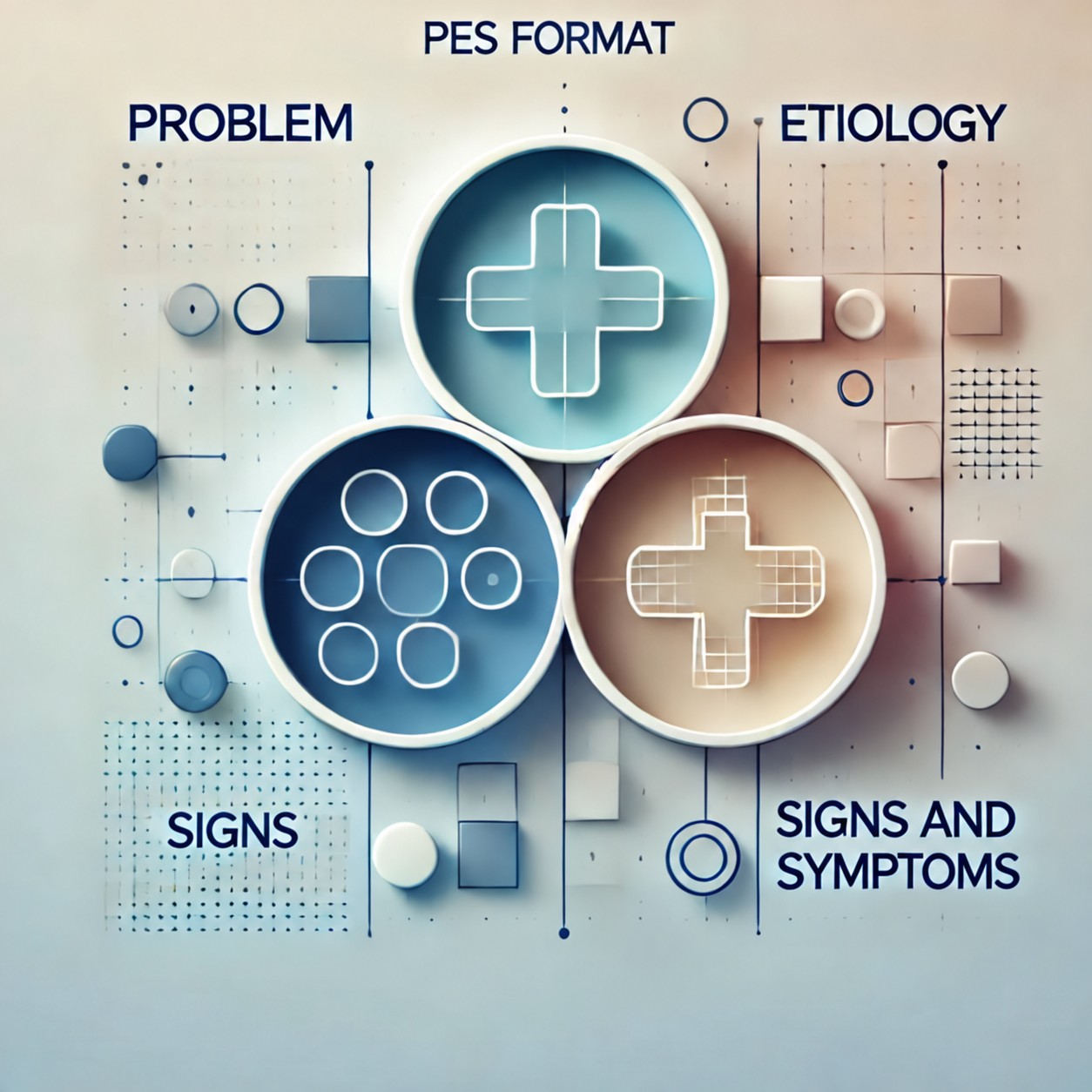
The PES format is a tool that helps structure nursing diagnoses. PES is an acronym for three main components: Problem (P), Etiology (E) and Signs and Symptoms (S).
How Does the PES Format Work?
The PES format is used to structure diagnoses clearly and understandably:
- Problem (P): Describes the diagnosis. It identifies the observed or anticipated human response.
- Etiology (E): Describes the cause or factors related to the problem. It answers the question "Why does it occur?"
- Signs and Symptoms (S): Includes observable evidence and patient statements that support the diagnosis.
A Complete PES Example
Diagnosis: Impaired physical mobility
PES format:
- P: Impaired physical mobility
- E: Related to a hip fracture
- S: As evidenced by difficulty walking and pain with movement
Common Mistakes When Using the PES Format
Avoiding these common mistakes will improve diagnostic accuracy:
- Lack of specificity: Stating overly general problems, such as "Discomfort."
- Incorrect etiology: Linking the problem to a medical diagnosis instead of a cause that can be observed in nursing assessment.
- Missing evidence: Omitting the signs and symptoms that support the diagnosis.
Practical Example: Applying NANDA Diagnoses
This practical example shows how to identify and structure a diagnosis using NANDA domains, diagnosis types, and the PES format. The case focuses on a patient with mobility and pain-related problems.
Case Description
A 65-year-old male patient is admitted with a hip fracture after a fall at home. He has significant pain, difficulty moving, and a history of poorly controlled type 2 diabetes. He expresses concern about his ability to regain independence after surgery.
- Domain 4 (Activity and Rest): Disrupted mobility pattern.
- Domain 11 (Safety and Protection): Risk for postoperative infection.
- Domain 9 (Coping and Stress Tolerance): Anxiety related to recovery.
Identified Diagnoses
-
Diagnosis 1: Impaired physical mobility
- P: Impaired physical mobility
- E: Related to a hip fracture
- S: As evidenced by difficulty walking and pain with movement
-
Diagnosis 2: Risk for infection
- P: Risk for infection
- E: Related to recent surgery and type 2 diabetes
- S: No observable evidence, as this is a risk diagnosis
-
Diagnosis 3: Anxiety
- P: Anxiety
- E: Related to concern about recovery
- S: As evidenced by patient statements and visible nervousness
Care Plan
The following care plan is proposed based on the identified diagnoses:
| Diagnosis | Interventions | Expected Outcomes |
|---|---|---|
| Impaired physical mobility |
|
|
| Risk for infection |
|
|
| Anxiety |
|
|
More Examples of NANDA Nursing Diagnoses
NANDA nursing diagnoses cover a broad range of categories, allowing nursing professionals to address different aspects of a patient's health. The following are specific examples of diagnoses that can be used in clinical practice.
Nursing Diagnoses by Medical Condition
Nursing diagnoses can be grouped according to the diseases affecting patients. This helps nurses identify specific areas for intervention and develop more effective care plans. For example:
- Diabetes mellitus: "Deficient knowledge related to diabetes management."
- Chronic obstructive pulmonary disease (COPD): "Risk for impaired respiratory function."
- Heart failure: "Fluid imbalance related to decreased cardiac output."
Risk for Infection and Other Risks
Diagnoses that identify the risk for infection are crucial to preventing complications in vulnerable patients. This includes specific interventions to reduce those risks.
Fall Risk Factors
Risk for falls is an important diagnosis, especially for older adults or patients with conditions affecting mobility. Specific examples include:
- "Risk for falls related to muscle weakness and decreased mobility."
- "Risk for falls secondary to impaired balance."
Risk for Pressure Injury
Patients with limited mobility are at high risk of developing pressure injuries. Examples of diagnoses include:
- "Risk for skin injury related to prolonged immobility."
- "Risk for pressure ulcers in bedbound patients."
Common Problems: Acute and Chronic Pain
Whether acute or chronic, pain is a common response affecting many patients. Pain-related diagnoses are essential to effective pain management.
- "Acute pain related to tissue trauma."
- "Chronic pain related to arthritis."
Wellness and Health Promotion Diagnoses
Health promotion is a vital part of nursing care. Diagnoses in this category allow nursing professionals to encourage healthy habits and overall well-being.
- "Readiness for enhanced nutritional well-being."
- "Potential for improved mental health."
Frequently Asked Questions (FAQs) About NANDA Diagnoses
Here we answer some of the most common questions about NANDA diagnoses, their use, application, and benefits in nursing practice.
1. What are NANDA diagnoses?
NANDA diagnoses are clinical tools that describe human responses to actual or potential health problems. They are used worldwide to standardize nursing language.
2. What is the main purpose of NANDA diagnoses?
Their main purpose is to provide a standardized language that facilitates communication among healthcare professionals, improves the quality of care, and promotes evidence-based interventions.
3. How many NANDA diagnoses are currently recognized?
NANDA International currently recognizes 277 diagnoses, organized in Taxonomy II, which includes 13 domains and 48 classes.
4. What is the difference between a nursing diagnosis and a medical diagnosis?
A nursing diagnosis identifies human responses to health problems, while a medical diagnosis focuses on the disease or condition itself. For example, a medical diagnosis might be "hip fracture," while the nursing diagnosis would be "impaired physical mobility."
5. How can I learn to use NANDA diagnoses?
You can learn through official NANDA guides, dedicated training, and practice in patient assessment. Familiarizing yourself with the PES format and practical examples is also helpful.
6. Can NANDA diagnoses be used in every country?
Yes. NANDA diagnoses have an international scope. Although some institutions may adapt them to local needs, their language and structure are global.
7. What tools complement NANDA diagnoses?
NANDA diagnoses are complemented by systems such as NIC (Nursing Interventions Classification) and NOC (Nursing Outcomes Classification), which help with care planning and evaluation.
Additional Resources on NANDA Diagnoses
Here you will find supplementary materials to deepen your understanding of NANDA diagnoses, including downloadable documents, practical tools, and links to official resources.

Download NANDA 2024–2026 PDFs (Free)
| Document | Description | Link |
|---|---|---|
| Complete List of Diagnoses 2024–2026 | Includes the 13 domains and 277 NANDA diagnoses organized by domain and class. | Download PDF |
| NANDA Taxonomy II | The history and detailed organization of NANDA Taxonomy II, including its classes and domains. | Download PDF |
About This Guide
NANDA diagnoses are an essential tool in modern nursing practice. They provide a standardized language that improves the quality of care, supports communication among professionals, and promotes evidence-based practice.
We hope this guide gives you a solid understanding of the key concepts, from NANDA domains and diagnosis types to the practical use of the PES format. Explore the additional resources and keep learning to refine your skills!
Ready to get started? Download the available guides to learn more about NANDA diagnoses and NANDA Taxonomy II.